
I was having a conversation this week with a friend regarding their company’s in office and work-from-home policies.
While we didn’t necessarily agree on everything (benefits of WFH, productivity loss, etc.), we did agree on one core point: rarely do professions mandate 100% attendance unless it’s crucial to the job.
Practically speaking, unless you’re a receptionist, have a hands-on position (mechanic or doctor), or carry the keys to the office, you’re likely going to be offered some form of work-from-home incentive with your employment offer.
In fact, it seems even receptionist jobs may not be safe from the onslaught of WFH. Recently a Miami hotel went viral for outsourcing the front desk to India via telecommunications equipment. Perhaps the individual wasn’t at ‘home’ per-se, but it did spark discourse about redefining roles that are traditionally thought of as being ‘boots on the ground’.

And if you think about it, from an employer’s perspective, it makes a lot of economic sense.
Fewer total bodies means less square footage on the lease, obviously. By rotating employees in and out on a hybrid space, you can effectively 3–4x your usable office space in any given week without paying one cent more.
But there are secondary benefits beyond a smaller footprint that have the Mckinsey consultants salivating. Fewer parking spaces, less water for toilet flushes, less pizza for the parties, a smaller & more affordable coffee machine lease….the list could go on forever.
By spinning ‘work from home’ from being confined to your isolated prison into an employee empowerment initiative (after all, think of your FREEDOM!), companies have been successful in silently and sneakily passing on once-immovable fixed overhead costs to their employees without them being the wiser.
And the drawbacks to the employer for WFH seem to be pretty concrete and explored. Yes, its been undoubtably proven that productivity sinks as fewer bodies attend the office, somewhere in the range of 10–20%. But if the fixed costs are reduced more than that 20% drop in productivity, then does it really matter?
As for the ancillary issues? Employee mental health, retention, or office culture? Those effects may not be known for years and are too hard to track anyway. So why care?
It’s not my intention to paint a bleak future of remote work, or to try and convince you the idea is sinister. Admittedly, remote work has enabled people to live happier and fuller lives. And the overall benefits to the individual may outweigh the drawbacks, though only time will tell.
Losing Where we CAN Work
However, the biggest issue I’ve found with WFH is that, since COVID, we’ve put ourselves on a trajectory from which there is no return. As companies abandoned their space in droves, Developers and Landlords (who also tend to reduce ideas to numbers) realized they had an issue: Traditional office Space demand was cratering.
Armed with a problem and determined to find a solution that worked for no-one, real estate holders turned to space transition. If everyone was to work from home, then why not convert the office space into the home, or at least home-adjacent amenities?
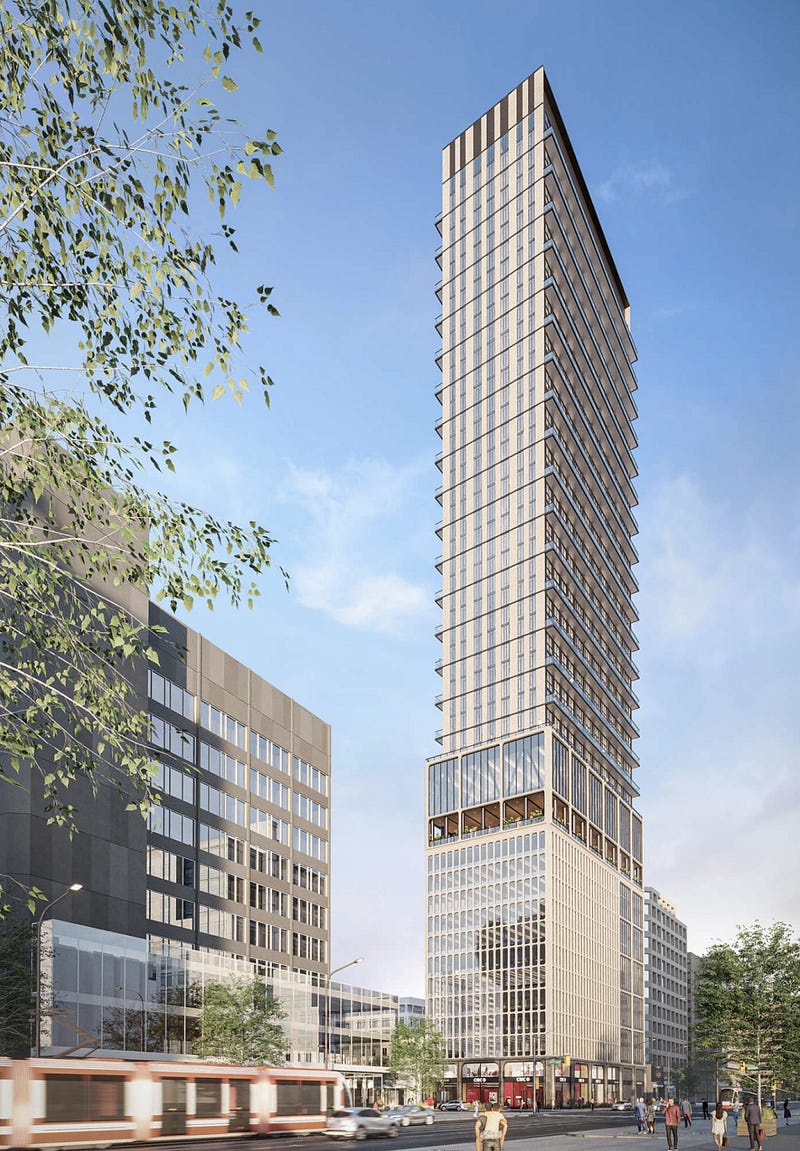
Take 1 Saint Clair West, for example. The owners determined that demolishing a historic and rather large 37 storey office building at Yonge & St Clair (With a subway directly below), was not financially viable (or that was the PR story…it’s far more likely that it was not feasible).
The developer, Slate Asset Management, enlisted architect firm Gensler to repurpose the building as a vibrant mixed-use development.
Since the pandemic, there’s been roughly 70 Toronto office buildings assessed for conversion suitability to a variety of uses, including Condominium, wellness, retail, medical, and more. About 25–30% were found to be plausible candidates.
Given that Toronto has about 74 million square feet of office space in its downtown core, I don’t think we’re witnessing a renaissance of any kind. No, we don’t need picket lines outside the Atrium on Bay with employees shouting “Save our Office!”
But the prominent examples and thought-experiments we are seeing are indicating one core tenet: Office space is not returning to the way it once was.
We may not see the effects tomorrow, or even next year. But in 5–10 years, real estate experts are predicting that the supply of new office space will dwindle significantly, to try and keep in line with that declining demand.
Death of The Third Place?
It’s impossible to have a conversation regarding return to office without also bringing up the concept of the third place.
If you’re not familiar with the third place, its this concept that every happy human should have a space that isn’t home, and isn’t work. These spaces should be familiar, frequently visited, and give the belonger a sense of community beyond utilitarianism.
Ideally, the third place should be built around casual connection and optional activity. Not every facility will be seen as a third place to everyone, but everyone should see somewhere as their third place.
To everyone, the venue will be different. But generally, coffee shops, pubs, libraries, bookstores, gyms, etc. can all be safely considered a third place for some section of the community.
Blurring the Lines
As home spaces shrink, the work tends to shift from being ‘at home’ to ‘at the third place’. This isn’t necessarily a bad thing, but it starts to blur the lines between business and pleasure, and converts these third places into…1 and 1/2 places?
Third place puritans may disagree. There are those that argue that a true third place cannot be a place of living or a place where work is done. I don’t necessarily agree with this line of thinking, because doing so would require a fourth or potentially fifth place. A third place is what you make it.
And, like all zeitgeist, third places can shift and grow with the community around it. While traditional media loves to run pieces about how the third place is dying, perspective would argue that the third place has simply morphed into something less recognizable. It’s even going online.
Serendipity Please
Notwithstanding the resurgence of the third place, importance should be placed on re-prioritizing the idea of serendipity, finding a pleasurable experience by happenstance.
The largest issue with re-creating serendipity is that we’ve programmed it out of our world. Menus are posted online, event information is fully described, there’s even a Google indicator to estimate how busy a particular spot is before leaving the comfort of your couch.
The only way to be serendipitous is to go back offline. We are already seeing this in the dating world, where users are tired of swiping and clicking, only to chat and get lost in cyberspace.
Popular reformed dating app turned irl matchmaker FIRST ROUNDS ON ME tried to solve this by creating a physical space in which we could actually start to revive the idea of the third place.
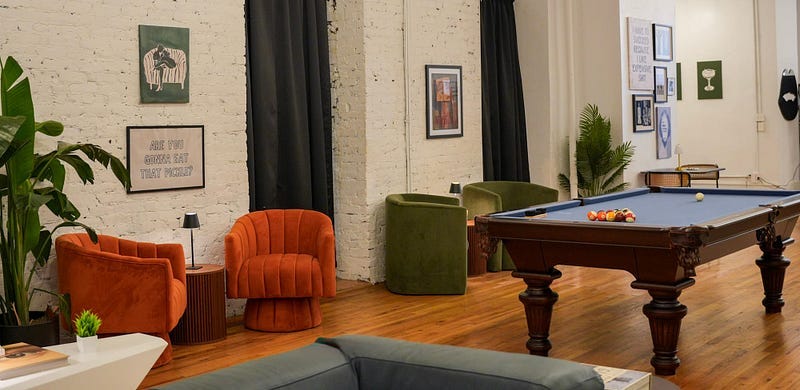
The idea is to provide membership-based access to a coffee shop, hangout spot, and community where natural connection can just happen. The space can host people before, during, or after working hours, and they occasionally host nights with a specific intention (i.e. a singles night).
This third place trend is creeping back into living as well. As the actual living space shrinks, emphasis is placed on the immediate amenities surrounding the space traditionally defined as ‘home’.
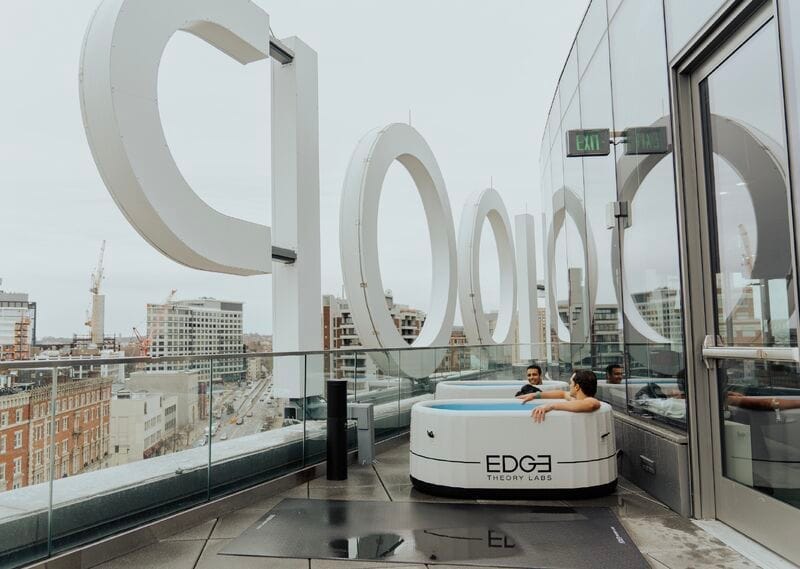
In Miami, FLOW House, the latest project by Adam Neumann (yes, THAT WeWork Adam Neumann) is taking direct aim at this concept by integrating wellness into living. The buildings amenities (apparently) feature a yoga studio, sauna, cold plunge, and more.
This points to a larger trend in the health and wellness space. OTHERSHIP’s success in Toronto and New York coupled with its ambitious plans for a 10,000 s.f. wellness-focused facility on the upper east side illustrate just how desperate people are to get out of their one bedroom apartment and re-engage in community.
How Office Space Can Learn from the Third Place
In 2026, we’re starting to see studies that disprove the theory that office space is a thing of the past. Productivity improves, employee retention improves, and overall general wellbeing improves when workspaces are clearly defined rather than blurred, though your mileage may vary.
The issue is, no one WANTS to return to the office full-time. Let’s face it, corporate America of the 90s and 2000’s did a fantastic job at painting a truly dystopian picture of office life.
This is the second time in a month I’ve mentioned the movie Office Space, not because its an incredibly funny and entertaining movie, but also because Mike Judge did an incredible job at depicting suburban corporate nightmare land.
The very plot of the movie revolves around the idea that the protagonist and his friends lead a semi-revolt around the office with a desire to never return. (Filmed in 1999, but oh so timeless.)
So HOW do we solve the problem of willpower? We bring back spaces people want to be in.
Part 1: Make Offices Beautiful Again
It’s often easier to look backward than it is to look forward. Office space wasn’t always grey walls, drop ceilings, and cubicles. It was, at a time, and in some places, beautiful to be in.
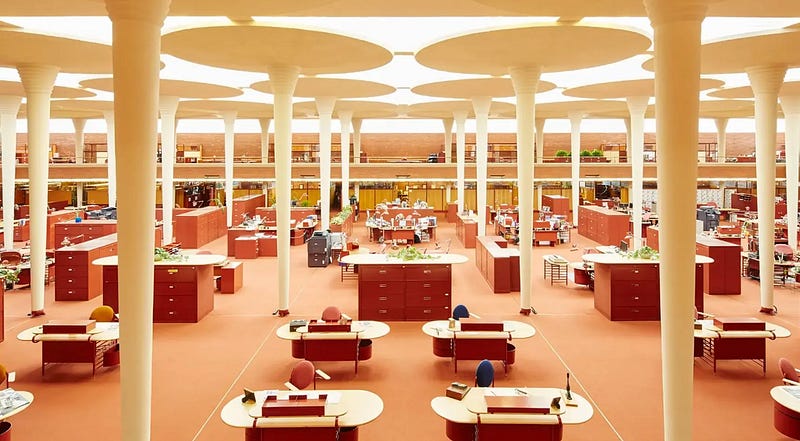
The SC Johnson Administration Building, designed by Frank Lloyd Wright, is a perfect example. In addition to being the perfect next set for a Wes Anderson movie, it features a ‘lilypad’ design, naturally drawing the eye up and making them aware of the space. The habitants feel as though they are under the surface of the pond and not working on Ziploc advertisements.
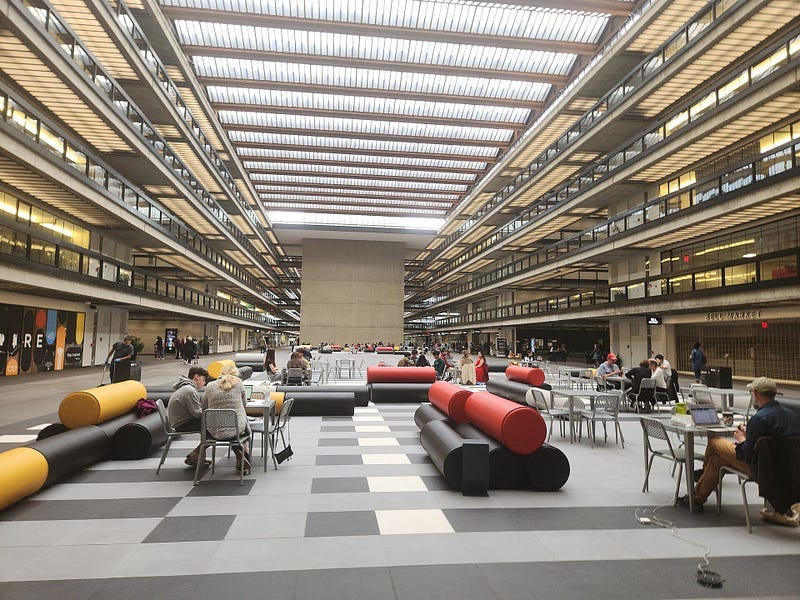
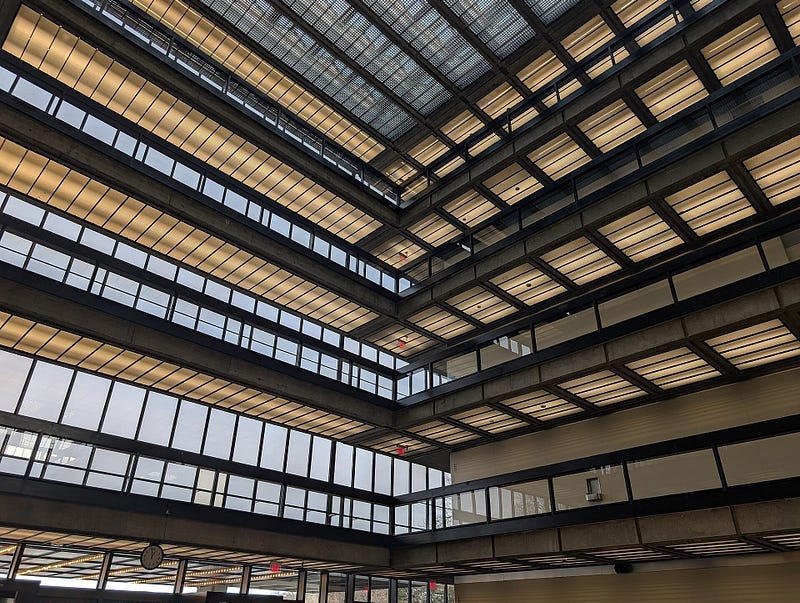
You might also recognize the layers of glass and cantilevered walkways, and massive open atrium of the Bell Works building in Holmden, NJ. The building was featured as being the headquarters of “Lumon Industries”…the fictional employer from the Apple TV Show, Severance.
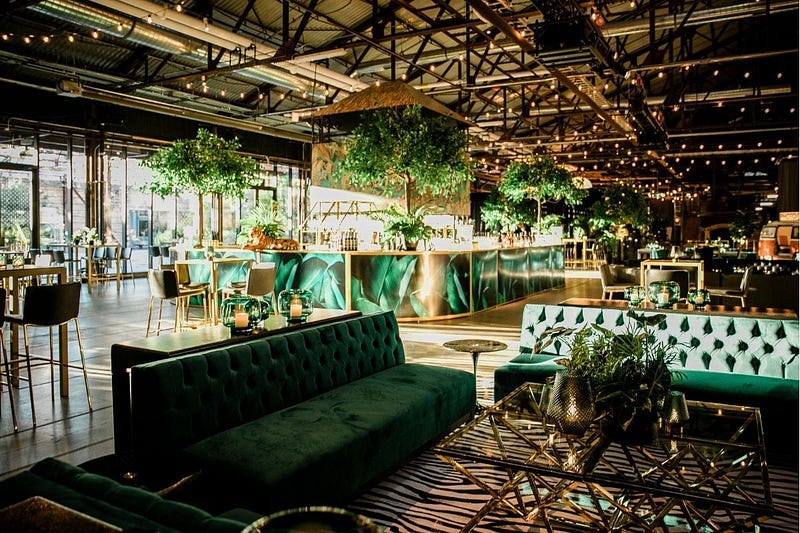
One final example, and looking closer to home, would be the Evergreen space at the Don-Valley Brickworks. Not only does this space feature expansive halls and community collaboration spots, but it also incorporates the idea of biophilia, harping on the concept that humans want to be around plants and trees (touch grass).
Part 2: Make Offices Functional Again
An office should be more than just a place to work. Employees should go from feeling like cogs in the corporate machine, to members of a society. It should really feel like Bay Area 2006 once again. Here are a few examples:
Google — St. John’s Terminal (NYC): described explicitly as meant to lure workers back, with extensive amenities; ENR reports ~26% of space dedicated to amenities, including fitness/medical, cafés, lounges, auditorium/events hubs.
Amazon Spheres (Seattle): biophilic “nature as amenity” workspace; Amazon describes it as a natural oasis and a different way to work.
Salesforce “Ohana Floors” (multiple towers): top-of-building community/event amenity floors are a signature part of their workplace strategy (good “amenity as culture” example).
So, what’s stopping why aren’t developers doing this? Same reason people don’t do anything they could: its freaking Expensive.
Office construction costs have climbed materially over the past several years, particularly in major North American markets. According to Turner & Townsend’s International Construction Market Survey (ICMS), the cost to build a high-rise prestige office in New York City was approximately US$573 per square foot in 2018, rising to about US$627 per square foot in 2021.
By 2024, premium high-rise office projects were reported at roughly US$990 per square foot.
The price jump is simply a symptom of higher costs across the board. Post-pandemic material inflation, labour pressures, higher financing costs, and elevated performance standards.
Where to From Here?
If companies can reduce their footprint, shift overhead onto employees, and maintain “acceptable” productivity numbers, there’s little short-term financial incentive to build beautiful, human-centric offices. Especially when construction costs are pushing toward $1,000 per square foot in major markets. The spreadsheet does not reward grandeur.
But culture does.
The companies that win the next decade will understand something simple: space is strategy. You cannot demand presence in a place that offers nothing in return. If work is going to compete with home, with the gym, with the café, with the third place, it has to be intentional. It has to be differentiated. It has to feel worth leaving for.
The future of the office isn’t full-time attendance or permanent exile to the spare bedroom. It’s selective gravity. Offices that function like civic spaces. Like creative monasteries. Like places where serendipity is possible again.
We are not witnessing the death of the office.
We are witnessing the death of the mediocre one.
And the next chapter will belong to whoever is bold enough to build something people actually want to walk into.