
I’ve spent the first half of this year traveling to New York quite aggressively.
Mostly to see friends, sometimes to see business associates. Each time I’ve gone, I’ve made a habit of trying to explore the world beyond the boroughs. Manhattan is nice, but expensive. So is Brooklyn. Very expensive for a bunch of trust fund hipsters trying to cosplay poor people.
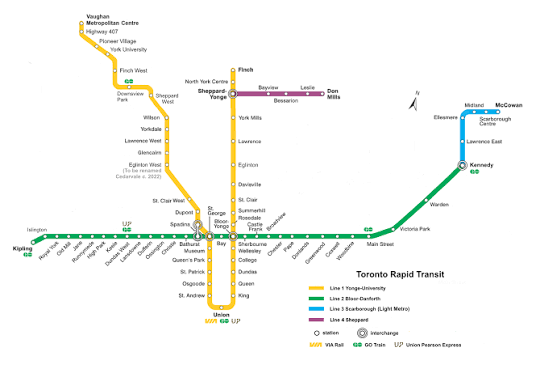
Growing up in Toronto and going to school in Miami, the train was something that took me time to understand. My exposure to a subway system was a “U” with the bloor-danforth line that only the destitute would frequent.
And trains? Never heard of them. A train trip was something you did once with your ageing grandfather or uncle across Canada, or to Ottawa or Montreal to see university friends if you were desperate and couldn’t find a porter flight.
So imagine a kid growing up with no rail exposure being introduced to the concept of the railroad. Penn Station, Grand Central. Very quickly, these transitioned from movie sets to actually useful tools.
30 minutes north on the Metro North would yield remarkably more affordable long-term stays.
Greenwich was not a fictional white-picket fence destination where some friends grew up, it became a reachable base when my flight landed in Laguardia.
But as my world continued to open to these additional locales where some spend entire lives, I began to see an emerging pattern: the slop.
New York is sexy because it’s old dressed up as new. Trending restaurants in a spot with stamped ceilings. Mosaics at every subway stop. An ice cream parlour in a prohibition-era speakeasy.
But the areas around the city don’t seem to carry the same grandeur.
It’s a dumb concept. Most of these areas have been around as long as the city itself.
But they aren’t nearly as attractive.
I accredit this to bid-rent and agglomeration. Land value peaks at the center and decays outward; only the core can economically justify monumental buildings, because only there does the land command the rents that pay for grandeur.
Manhattan's grandeur is also a timing artifact…most of its monumental fabric (Beaux-Arts civic buildings, the great terminals, the early skyscraper canyons) was built during the Gilded Age when enormous capital was concentrated in a tiny footprint.
Suburbs like Mamaroneck largely developed later and for a different purpose: they were built to be quiet bedroom communities, not civic showpieces.
Defining “Slop”
Remember that SpongeBob episode where the Krusty Krab becomes a restaurant chain, leading them to mass produce krabby patties?
I’ve often thought that SpongeBob was actually well ahead of its time. This may have actually proved it.

Because we saw this in restaurants that went corporate. Think of a burger restaurant. Those same exposed bulbs, fry baskets, and high top tables with barstools. Walking in you know the food will be mediocre and the bill about $20 more than it should be.
Turning homeward, we have the same issue. Toronto is facing an extreme bout of NIMBYism. Like, not in a ‘boomer with a sign’ way. In a dizzying, insane, shut down debate, rally the troops, mob at the steps of city hall kind of way.
As a result, planning applications have had to think un-creatively. An approved condo building is usually approved because it fits with the form. Translation? It’s identical.
If you live in Toronto (my apologies if you do) go downtown and count the number of buildings with the following characteristics:
- historical facade or some kind of brick or fake stone
- 3-4 storey commercial retail at the street level
- 30-40 storey 12 foot setback tower above
I’ve found this cancerous trend to be extremely fertile in cities with less or no history. Take Austin, for example.
The city was incorporated December 27, 1839, so it's about 186 years old on paper. But its population has doubled roughly every 20 to 25 years since its founding, and it crossed one million residents for the first time in 2026.
A city that keeps doubling has almost no old building stock left as a share of the whole…the physical Austin you walk through is mostly a product of the last two or three growth spurts. There's no deep sediment for character to accumulate in.
Same can be said of its population…who’s average age is just 33!
South Congress (SoCo) is the clearest before/after. A strip of local shops (Mi Casa, Sunroom) has been increasingly replaced by Hermès, Lululemon, Alo, and Aviator Nation; the same luxury-mall lineup you’d find in any affluent zip code.
Verts: an Austin-born döner spot that got taken over, gutted into a Chipotle-style knockoff, and then died anyway. Great example of the hollowing-out pattern, which is almost worse than a straight closure.
Jumpolin: an East Austin piñata store, was literally bulldozed in 2015 without the owners’ knowledge to make way for redevelopment. The on-the-nose parable of “soul demolished for slop.”
The “Keep Austin Weird” slogan itself: coined ~2000 by librarian Red Wassenich, then trademarked and sold on mass-produced mugs and t-shirts. The anti-sameness slogan became sameness merch. If you want one perfect irony to open or close the Austin section, that’s it
If you’ve read this far, you probably think I’m extremely cynical. And you’d be right. But I’m not. The cynic, as Oscar Wilde said, knows the price of everything and the value of nothing.
So what do we do to fight against this growingly concerning trend? I think the answer is very simple: serendipity.
Stop looking for the restaurants with the highest Beli rating or OpenTable stars. Go off the beaten path. Walk into a spot with no context. Order a coffee, talk to a barista. Ask for local recs.
We’ve been able to optimize everything and its slowly killing us
There’s an ancillary benefit to supporting an anti-slop culture too. And its within yourself.
Steven Bartlett got dragged for this a few weeks ago. One night of drinking set him into a tailspin equivalent to a first time chemo patient.
Optimization to the extreme has made us extremely fragile creatures. Imagine going from sleeping outside and killing bears to being upset when the air conditioning is off by one degree Fahrenheit.
So the next time you’re planning a drink with your friends. Don’t. Just go hit the local wine bar, find a spot with a line, talk to a stranger and ask for local recs.
Water flowing in a stream erodes rocks in its way. If all we do is chase highly rated slop, we will end up in a culture that has no history.
Edges define an object. Don’t lose them.
-Baron